- Get link
- X
- Other Apps

Scientific discoveries, achievements and inventions occur constantly. Throughout the year, the media pampered us with loud headlines and reported new patents, but the truly worthy discoveries of the year can be literally counted on the fingers. This year has not yet ended, but we have already accumulated 10 very interesting achievements and discoveries for the last 6 months of 2016.
Multicellular life appeared 800 million years ago as a result of a minor genetic mutation
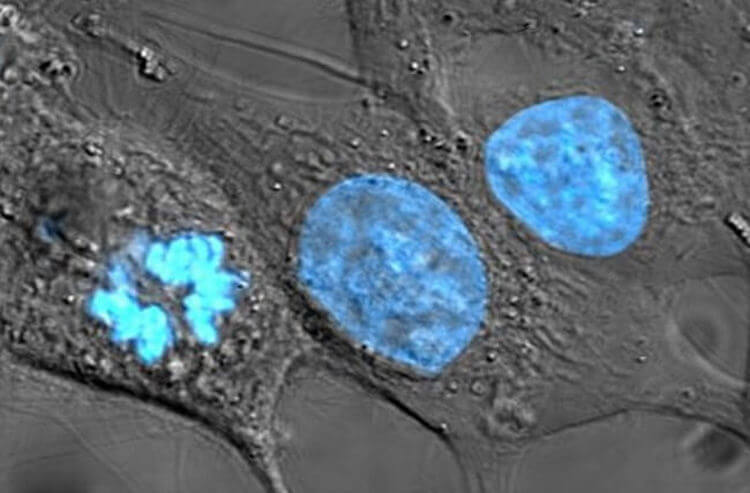
The researchers found that the ancient protein, called GK-PID, caused the development of unicellular organisms into multicellular organisms about 800 million years ago. This molecule has become a kind of trigger, from which the process of attracting chromosomes and combining inside the inner layer of the cell membrane during division began. It actually allowed the cells to divide correctly, avoiding malignant formations.
An amazing discovery also showed that the older version of the GK-PID behaved quite differently than it currently does in its more modern version. The only reason explaining this, indicates that the ancient gene GK at some point doubled. One copy continued to contribute to the preparation of raw materials for DNA, and the second one just turned out to be GK-PID. In other words, the appearance of multicellular life is due to the result of a single mutation.
Detecting a new prime number

In January of this year, under the Great Internet Mersenne Prime Search program, a new prime number of 2 ^ 74,207,281-1 was discovered.
You are probably wondering: what is the importance of this discovery? The fact is that modern cryptography for data encryption requires the use of very complex numbers, as well as Mersenne prime numbers (at the moment only 49 such numbers are found). The new detected number is the longest one ever found and contains almost 5 million more digits than the nearest previous number. The total number of figures in this number is just below 24,000,000, so the more practical writing of it looks like this: 2 ^ 74,207,281 - 1.
The solar system found the ninth planet
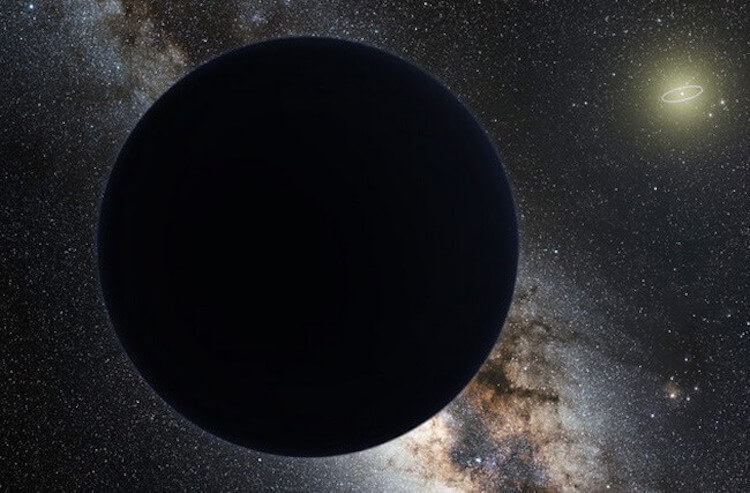
Even before the discovery of Pluto in the 20 th century, there were theories about the existence of the ninth planet, the planet X, which is behind Neptune. It was indicated by the peculiarity of the behavior of gravitational waves, which could be caused by the presence of a very massive object. Later, the planet Pluto was discovered for this planet, but the features of gravitational distortions were not fully explained until the California Institute of Technology provided evidence that the ninth planet does exist and has an orbital period of 15,000 years.
Astronomers who wrote about their discovery say that the probability that a very dense cloud of asteroids or meteorites was taken over the ninth planet is only 0.0007 percent.
At the moment, the Ninth Planet is still only a hypothetical assumption, since no one has seen it before. However, astronomers estimated that the reason for this is its simply colossal orbit. If this planet does exist, then it most likely should be approximately 2-15 times more massive than the Earth, and its orbit is somewhere between 200 and 1600 astronomical units from the Sun. One astronomical unit is 150,000,000 kilometers. In other words, the Ninth Planet can be located at a distance of 240,000,000,000 kilometers from the Sun.
A method of practically perpetual data storage has been created

Over time, everything is completely useless, so we, for example, do not have the ability to store digital data on the same media for an infinite amount of time. However, this may soon change due to the opening of the University of Southampton. Scientists using nanostructured glass have successfully developed a new process of writing and reading data. The storage device itself looks like a small glass disk with the size of a little more than a quarter, but can store up to 360 TB of data and withstand temperatures of up to 1000 degrees Celsius. This means that at an average room temperature, data on such a carrier will be stored for about 13.8 billion years (that is, about the same as the age of the universe itself).
The data is recorded on the carrier with the aid of superfast short and laser pulses. Each data file is written in three layers of nanostructured points, spaced from each other at a distance of only 5 micrometers. When reading, information is realized (read) in five directions: according to the three-dimensional arrangement of nanostructured points, as well as their size and orientation.
Between the blind-eyes and four-fingered vertebrates, a relationship was found
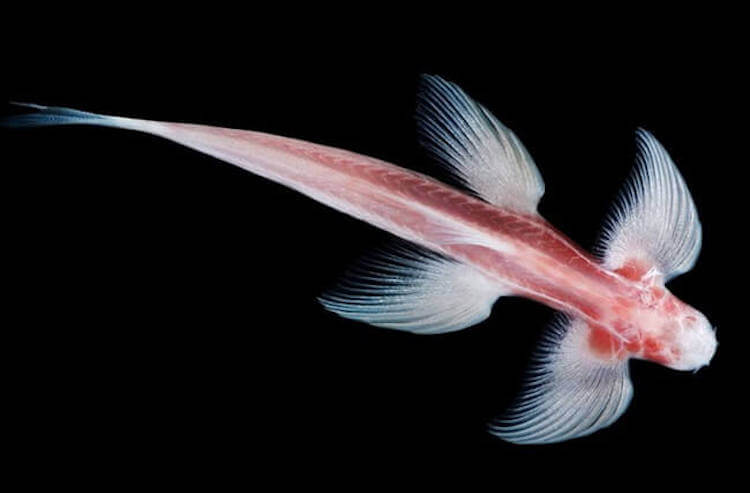
Over the past 170 years, science has come to the conclusion that vertebrate life on the planet has evolved from fish that inhabited the waters of ancient Earth. To come to this conclusion, scientists made observations of researchers from the New Jersey Institute of Technology (USA) who discovered the Taiwan blind-eyed (it's such a fish, if anyone does not know) that can crawl on walls and has almost the same anatomical abilities as amphibians or reptiles.
For science, from the point of view of the evolution of the adaptive features of species, this discovery is very significant. It can help scientists better understand how the process of development of prehistoric fish occurred in terrestrial tetrapods. It should be noted that the difference between blind eyes and other fish that can move on a hard surface is their gait, which amounts to the active use of "hip parts" when crawling.
SpaceX company successfully carried out a vertical landing of a space rocket

Previously, the vertical landing of the rocket on planets and satellites, we could see only in cartoons and sci-fi movies, but in reality such a landing is an incredibly difficult task. That is why space agencies build missiles with such a consideration that the spent parts either fall into the ocean or simply burn in the atmosphere. The ability to land a rocket vertically means that the launches themselves, if desired, can be made much cheaper and use the spent steps for the following projects. This can really save a lot of money.
Private American company SpaceX made the first successful vertical landing of the missile on April 8 this year, after that they did the same, but with the participation of the floating barge, as a landing site. This success of the company in the future can not only save a bunch of funds for the next launches, but also significantly reduce the time between these launches.
For the sake of justice it should be noted that not only SpaceX managed to do this. The success of the experimental launches was also noted in Blue Origin by Jeff Bezos (owner of Amazon). True, in this case it was not a question of a full launch and entry into orbit, like SpaceX, but rather a rocket lift to a height of 100 kilometers and a soft landing back to Earth.
Be that as it may, such projects force space agencies to move forward in space research.
Cybernetic implant, which returned a paralyzed person the ability to move their fingers
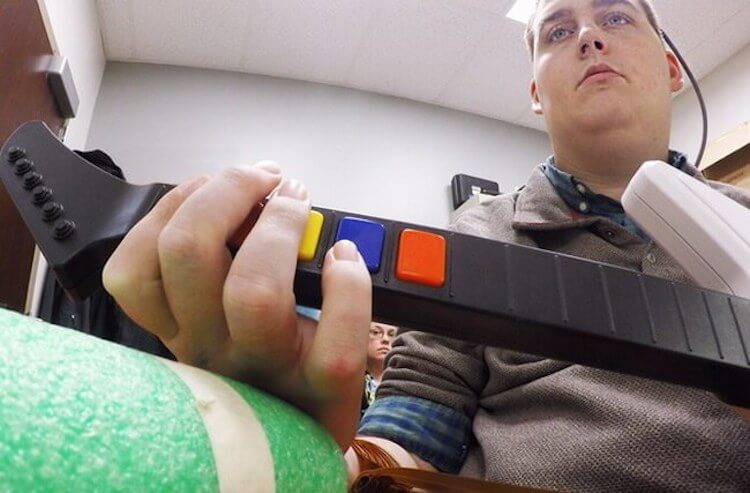
After installing a special compact implant in the brain, a person who has spent the last 6 years of his life completely paralyzed, returned the ability to move his fingers.
This cybernetic chip was created by scientists from Ohio State University (USA) and sends signals to a nearby receiver that processes them and transmits them to a special electronic glove on the person's arm. In the glove are electrical wires that stimulate certain muscles and cause the fingers to move. The effectiveness of the device is such that with the help of it a person could even play the musical game Guitar Hero, thus surprising not only the scientists, but also the doctors participating in this experiment.
Stem cells can return people with stroke to their feet

At the Stanford University School of Medicine, trials were conducted using human stem cell injections directly into the brain of stroke patients. The procedure was successful and showed complete absence of any side effects, except for mild headache, which soon stopped after the experiment. All 18 volunteers who had suffered a stroke and completed post-insult rehabilitation six months ago, after this experiment, there were significant improvements in health. Stem cell injections have raised the mobility of patients to such an extent that those people who were riveted to wheelchairs all the time have again found the opportunity to walk.
From carbon dioxide it is possible to make stones

Reducing carbon dioxide emissions is an important part of observing the balance of CO2 on the planet. When any combustible materials are burned, all the CO2 stored in this material is released into the atmosphere. People are trying to solve this problem for more than one generation, but they are still losing. As a consequence, climate change on the planet.
Scientists from Iceland have recently found, perhaps, the most effective way to permanently block emissions of carbon dioxide into the atmosphere. The researchers injected a certain amount of CO2 into the volcanic Icelandic rock, and this accelerated the process that turns basalt into carbonate minerals, which later become limestone. Usually this process takes hundreds and thousands of years, but scientists from Iceland could complete the process in just two years. As a result, carbon dioxide is sealed in stone and can be stored underground or even used as a building material without releasing it to the atmosphere.
The Earth has "one more Moon"

Scientists from the NASA aerospace agency have discovered an asteroid captured by the gravity of our planet and now in orbit. In fact, this makes him the second natural companion of our planet. Of course, around our planet, many things fly and fly: space stations, artificial satellites and just a thousand tons of different space debris. But we always had only one moon. And now there are two of them, since NASA confirmed the existence and orbit of the object 2016 HO3.
The object itself is drawn around our planet at a very great distance and is more likely to be affected by the gravitational action of the Sun, rather than the Earth, but it turns around not only around our luminary, but around our planet. Do not rush, however, to pack your bags, in order to walk around our new natural satellite in the near future, since its dimensions are only 40 to 100 meters in diameter.
Despite the fact that the 2016 HO3 has a very stable orbit around the Earth and the Sun, several centuries later, according to Paul Chodas from the NASA center for the study of near-Earth objects, the object will leave the orbit and possibly fly away from the solar system. Chodas also adds that the 2016 HO3 was a very stable quasi-satellite of the Earth for more than one century.
The article is based on materials .
Comments
Post a Comment